
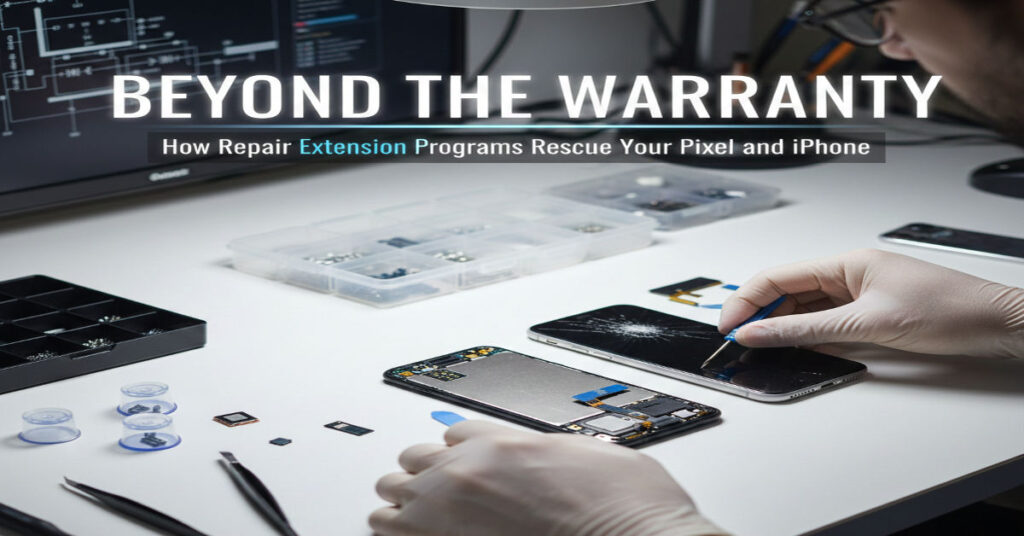

Repair extension programs have emerged as a pragmatic response by major hardware makers to recurring manufacturing defects that standard warranties simply do not address. These initiatives allow owners of affected devices to get free or extended repairs for specific defects within a defined period after original purchase. In the case of Google, the Extended Repair Program for select Pixel devices covers display issues such as vertical lines or persistent flickering for up to three years after purchase, provided the device’s serial number or IMEI qualifies and it meets program criteria. This article explores how such programs work, compares what Google and Apple offer, charts the timeline and eligibility requirements, and explains what device owners need to know when seeking repairs.
Why Repair Extension Programs Matter
Repair extension programs sit at the intersection of product quality assurance and consumer protection. For device makers any widespread or systemic defect — from displays to batteries — risks reputational damage if left unaddressed. By identifying affected units and offering targeted support, companies can reduce customer friction and legal risk while maintaining market trust.
For consumers these programs can represent significant value. Most standard warranties last only 12 months from purchase, and third‑party or out‑of‑warranty repairs can be costly, especially for premium devices. With an extended repair program, eligible owners often get a free repair or replacement for a significant defect, even after the original limited warranty expires.
In practice however, enrollment and eligibility verification can be complicated, and how a maker defines a qualifying defect or device batch has big implications for who gets free repairs and who ends up paying.
Google’s Extended Repair Program for Pixel Devices
Google’s Extended Repair Program specifically targets hardware defects confirmed by internal data or partner diagnostics. Most conspicuous has been the Pixel 8 display program which covers devices showing vertical lines or flickering issues. Under this initiative Google offers support for up to three years after the original retail purchase date, substantially beyond the usual one‑year limited warranty.
To qualify, a Pixel 8 must exhibit a display fault such as a vertical line running from top to bottom or persistent flickering, and its identifier must be approved by Google or an authorized repair partner. Coverage includes one free display replacement. However, cracked screens, liquid damage or other unrelated physical damage will typically disqualify eligibility. Any repair done under the program carries a 90‑day warranty on the replaced parts.
How Google Defines Eligibility
Eligibility in Google’s repair extension programs relies on a narrow set of conditions framed around device faults as observed in the field. The recent Pixel 8 program, for example, deliberately excludes units with external damage. This rule aims to isolate manufacturing defects from accidental damage, but it also creates friction for owners whose screens may have suffered minor wear that is unrelated to the covered defect.
Technicians and service partners assess eligibility by inspecting the device and validating the qualifying fault, often tied to IMEI or serial number lookup. The existence of online eligibility check tools adds transparency but not necessarily clarity for end users, leading in some cases to disputes or denial of coverage.
Table 1 illustrates the key eligibility criteria and limits for the Pixel 8 and related Google repair programs.
Google Repair Extension Program Eligibility Criteria
| Device Model | Covered Faults | Coverage Period | Exclusions | Warranty After Repair |
| Pixel 8 | Vertical line or display flickering | 3 years from purchase | Cracked screen, liquid damage | 90 days |
| Pixel 9 Pro/Pro XL | Vertical line or display flicker | 3 years from purchase | External or liquid damage | 90 days |
| Pixel 9 Pro Fold | Functionality issue (likely display‑related) | 3 years from purchase | Cracked screen, liquid damage | 90 days |
Apple’s Repair and Service Extension Landscape
Apple also operates a suite of repair extension and “service programs” that address specific hardware defects across products including iPhones, MacBooks, AirPods and power adapters. These programs are typically active for a defined period after original retail sale and apply only to particular model ranges and fault types.
Unlike Google’s narrowly scoped Pixel programs, Apple’s coverage spans multiple categories such as no‑sound issues on iPhone 12/12 Pro, display backlight repair for certain MacBook Pro models, and battery replacement for older laptops. Eligibility usually requires entering the device serial number on Apple’s official Service Programs page to confirm inclusion. Repairs under these programs are free of charge for qualifying models and faults, but like Google, unrelated damage must be resolved first and eligibility is time bound.
Apple’s support infrastructure includes Apple Stores, Apple Authorized Service Providers, and mail‑in options. Additionally, Apple’s Independent Repair Provider program enables third‑party repair shops to access genuine parts and tools for out‑of‑warranty repairs, although this is separate from service extension programs.
Sample Apple Repair Extension Programs
| System Fault | Affected Models | Typical Coverage | Notes |
| MacBook Pro display backlight issue | 13‑inch models | Free repair; typically up to 4 or 5 years after purchase | Depends on model and purchase date |
| iPhone 12 / 12 Pro no sound issue | Select units | Free receiver replacement up to 3 years | Applies to specific serial ranges |
| Power adapter recall and exchange | Various | Free exchange | Applies to affected adapter models |
Real‑World Experiences and Consumer Challenges
In practice, extended repair programs can be more complex than they appear on paper. Cultural and procedural challenges affect how owners experience the process. For example, some Pixel 8 users report being told their devices are eligible for extended repair only to face service partner systems that cannot process the claim without additional case numbers. Others say inspections deemed minor cosmetic imperfections as disqualifying factors, pushing them into paid repairs. These anecdotes highlight the tension between manufacturer policy and field implementation.
Similarly, Apple service programs require careful serial‑number verification and may demand unrelated damage be fixed separately before addressing the defect covered under a service program. Eligibility is model specific and time bound, and owners sometimes learn they are outside the active window only after initiating a claim.
Expert Views
Consumer electronics warranty and repair expert Helena Porter says that extended repair programs reflect both product accountability and market incentives. “Targeted service programs let manufacturers manage systemic hardware faults without broad warranty extensions, but they also create ambiguity for consumers who lack clear documentation,” she notes.
Warranty lawyer Dr Malik Forsythe adds that “consistency in eligibility criteria and transparent communication from the maker are essential to avoid disputes, especially when devices just miss the coverage period.”
Product teardown analyst Rina Shah emphasizes the operational side: “Repair partners need robust systems for serial‑based eligibility, and when these systems lag, owners can experience confusion, delays or denial of service.”
Takeaways
• Repair extension programs address specific hardware defects beyond standard warranties.
• Google’s Pixel programs cover defined display faults and require serial or IMEI qualification.
• Apple’s service programs span multiple products and common faults like sound, backlight and batteries.
• Eligibility is strict and unrelated damage can void free coverage.
• Operational friction at service centers can frustrate owners needing repairs.
Conclusion
Repair extension programs serve a real consumer need by offering free remedies for widespread hardware defects that standard warranties do not cover. For Pixel owners, Google’s three‑year display programs provide extended support for vertical line and flickering issues, while Apple’s suite of service programs allows owners of older or flawed devices to get targeted fixes at no cost. Yet these initiatives also reveal the intricate balance between manufacturer risk management, consumer expectation and service delivery. As hardware complexity rises and devices age, clear eligibility rules and smooth repair workflows will determine whether these programs genuinely enhance device longevity or simply add another layer of frustration for owners seeking reliable support.
FAQs
What exactly is a repair extension program?
A repair extension program is a manufacturer‑led initiative that offers free or extended repair coverage for specific hardware defects beyond a device’s standard warranty period.
How do I check if my device qualifies?
You typically need your device’s serial number or IMEI and must enter it on the manufacturer’s official support page for service programs.
Does a repair extension program cover accidental damage?
No. These programs usually cover only specific manufacturing defects and will not pay for accidental damage.
What if my device isn’t eligible?
You can still pursue standard warranty service if within the warranty period or pay for out‑of‑warranty repairs through authorized channels.
Do these programs apply worldwide?
Yes, but availability and terms can vary by region and authorized service infrastructure.
REFERENCES
Android Authority. (2024, June 13). Google announces extended repair program for Pixel 8 display issues. Android Authority. https://www.androidauthority.com/pixel-8-display-repair-3451483/
PhoneArena. (2026). Google announces extended repair program for select Pixel 8 units. PhoneArena. https://www.phonearena.com/news/google-pixel-8-extended-repair-program_id159413
iSystem. (2026). Apple warranty extension programs. i-System. https://i-system.gr/en/service/service-anaklisi
Ntiva. (2026). Apple’s exchange and repair extension programs. Ntiva Help Center. https://support.ntiva.com/hc/en-us/articles/360033327411-Apple-s-Exchange-and-Repair-Extension-Programs
Apple Newsroom. (2025, May 28). Apple launches self service repair for iPad expands repair programs. Apple. https://www.apple.com/bh/newsroom/2025/05/apple-launches-self-service-repair-for-ipad-expands-repair-programs/
Apple Support. (2026). Independent repair provider program. Apple. https://support.apple.com/en-ae/irp-program
AndroidGreek. (2025). Apple service programs get free repairs without warranty. AndroidGreek. https://androidgreek.com/apple-service-programs-2025-get-free-repairs/
Compare iPrice. (2025). Google Pixel 9 series extended repair program display issues. Compare iPrice. https://compare.iprice.my/news/202512091621_Google-Pixel-9-Pro-Fold-Display-Repair-Warranty-Program