
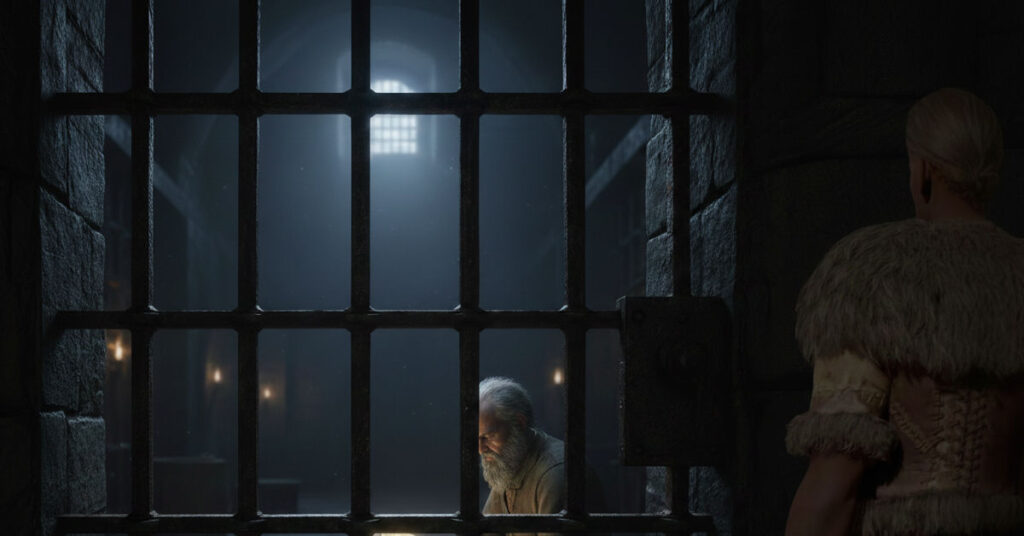

In The Elder Scrolls IV: Oblivion Remastered, what begins as a simple act of theft can spiral into an epic narrative of unintended consequences, community banter and systemic absurdity. At its core this is a story about players, game systems and the culture that arises where rules, exploits and reputation intersect. In 2025, Reddit users and gaming news outlets chronicled examples of characters locked away for almost incomprehensible spans of in‑game time. One such player, known online as “Scribe_Of_Satire”, accrued a bounty so vast that the game calculated a sentence exceeding 55,000 years behind bars. Another player, Viccytrix served nearly two decades for a mix of theft, assault and murder. These cases have become part of an informal canon that Oblivion communities reference when talking about system boundaries, narrative play and player creativity.
This cultural phenomenon is not just about the numbers. Players document their stories on platforms like Reddit where they exaggerate, joke and ponder deeper implications. One fan observed that by the time Scribe_Of_Satire was freed, the Tamriel calendar had looped back to an era centuries before the game’s setting. Another remarked on the surreal nature of spending two millennia inside a virtual cell without any real narrative progression. These anecdotes speak to an emergent culture where the mechanics of Oblivion Remastered collide with creative play, community memory, and the human impulse to tell stories about absurd situations. Journalists and players alike have weighed in on what these extreme jail times reveal about system design, player agency and the shared lore of an enduring franchise.
How Oblivion’s Crime System Became a Cultural Mirror
Long before Oblivion Remastered vaulted back into the gaming conversation in 2025, the Elder Scrolls IV franchise had already cemented its reputation for emergent systems. Theft, assault and murder have always generated bounties that scale with the severity of crime. In theory, a guard captures a player with a high bounty, and the player chooses to pay a fine or serve time in jail proportional to that bounty. In practice this system became a site of experimentation and narrative humor. One player’s joyride through Cyrodiil’s cities resulted in a bounty of over 2 billion gold purely through stealing items, leading to a sentence of roughly 20,178,790 in‑game days. Mechanics that once felt logical began to reveal their limitations when pushed to extremes by player creativity.
A Fextralife wiki chronicling crime mechanics outlines how different actions generate bounty and how long sentences are calculated. Typically, one day of jail is assigned for roughly every 100 gold of bounty with skill penalties applied during incarceration. This means normal play rarely results in sentences beyond a few weeks, but creative players exploit this formula to produce outcomes that stretch belief.
Such exploits and anecdotes quickly entered community lore. Commenters on Reddit debated whether this kind of emergent play was intentional or just an artifact of how the remastered engine handles large numbers. One Redditor joked that by the time the player was released, they’d witnessed the rise and fall of empires within the Tamriel timeline. These stories resonate because they reflect how players use game systems not just to win or lose but to generate narrative meaning through play.
Case Study One: Scribe_Of_Satire’s Billion‑Gold Bounty
One of the most talked‑about Oblivion Remastered stories in 2025 involved a player who amassed an astonishing 2,105,000,000‑gold bounty by stealing over one million items without committing any violent acts. That alone distinguishes this case from more conventional high‑bounty recordings where assault or murder play a significant role. The result was a jail sentence that, when computed by the game’s own logic, extended to 55,284 in‑game years or roughly 20 million days.
This case became iconic almost immediately after it was shared on the Oblivion subreddit. Community members highlighted how improbable it was to amass that many stolen items, prompting theories about inventory exploits or automation of theft behavior. Players speculated whether this was something Bethesda ever anticipated. It was both a humorous anecdote and a compelling lens into how open‑ended systems can produce unintended consequences when pushed far outside common play patterns.
An expert in gaming culture, Henry Jenkins, once noted that player communities often appropriate system quirks as shared folklore that binds participants in a game’s culture. “When players discuss these extreme scenarios,” Jenkins said, “they are engaging in a form of narrative play that transcends typical achievements and enters communal storytelling.” In the case of Oblivion Remastered, the 55,000‑year sentence became such a tale, discussed in forums, social media threads and even referenced by gaming news outlets around the world.
Case Study Two: Viccytrix’s Castle Experiment
Not all extreme jail stories in Oblivion Remastered hinge on exploits of vast scale. Another well‑documented example involved a player named Viccytrix, who achieved a bounty of 698,040 gold through a combination of theft, assaults and murders, including stealing seven horses. This resulted in a sentence of almost 19 years in jail, still remarkable in its own right but grounded in a mix of intentional criminal play and system exploitation.
The Reddit post accompanying this case showed a rap sheet detailing the crimes committed, highlighting both how the player intentionally amassed the bounty and how the punishment tracked with in‑game mechanics. Players were fascinated by the juxtaposition of narrative intent and system mechanics. Rather than seeing jail time as a setback, many treated it as an experiment in observing how the game world reacts to extreme behavior.
Game designer Warren Spector once observed that emergent gameplay arises when designed constraints interact with player creativity in surprising ways. “The magic happens not when players follow the rules, but when they rewrite them,” Spector said. Viccytrix’s story illustrates that principle: by treating jail time as another narrative space to explore, this player turned punishment into pseudo‑performance art within a living game world.
Community Interpretations of Jail Time as Narrative Play
Across forums, community sites and social networks, Oblivion Remastered jail time stories ignited debates about what constitutes meaningful play. For some, these tales were amusing outliers. For others, they became a way to reflect on the nature of virtual punishment and reward. The game that once centered on heroic quests now became a forum for contemplating the absurdity of punishment systems when stretched to extremes.
A gamer psychologist, Dr. Samantha Black, commented on this phenomenon: “Players often appropriate unintended system behavior as a form of self‑expression, a way to personalize narratives. These extreme sentences are less about punishment and more about community storytelling.” Whether treated as comedy or critique, these tales underscore how participatory culture shapes meaning around mechanics.
Players also highlighted how extreme jail times rarely impede progression in any meaningful narrative sense. The Elder Scrolls main storyline continues unaffected by incarceration, and many players approaching these extremes did so after completing core quests. Thus, jail time became a sandbox for community experimentation rather than a hindrance to main‑story play.
Extreme Jail Time Cases in Oblivion Remastered
| Player | Bounty (Gold) | Crimes | Jail Time (In‑Game Days) | Community Source |
| Scribe_Of_Satire | 2,105,000,000 | ~1,000,000+ stolen items | ~20,178,790 | PC Gamer/GamesRadar |
| Viccytrix | 698,040 | 2,906 thefts, 45 assaults, 7 murders | ~6,990 | Gamerant/GamesRadar |
Mechanics Behind Jail Time and Player Response
The formula used by Oblivion Remastered to calculate jail time is straightforward: one day of jail for roughly every 100 gold bounty. The consequence of serving time is not just that the character is locked away, but also that skill points can be randomly reduced. Most community guides note that up to ten skill points may be lost during incarceration, although the full impact on a character’s build varies.
This caused some players to view extreme jail sentences as trivial in terms of gameplay loss, especially compared with the narrative and communal payoff of sharing Oblivion Remastered Player Jail Time story. For others, the risk of losing valuable skill progress proved a meaningful deterrent, encouraging different strategies to avoid or minimize jail time, such as paying fines or avoiding crime altogether.
Another practical consideration players discuss is that once bounties exceed a certain threshold, paying them off becomes Oblivion Remastered Player Jail Time impossible, forcing the choice between jail or unintended crashes or glitches reported in community threads. Some players have even reported technical issues when serving sentences, adding another layer to the cultural conversation.
Oblivion Remastered Crime to Bounty Mechanics
| Crime Type | Bounty Impact | Notes |
| Theft | 0.5 × item value (min 1 gold) | Small crimes accumulate with scale |
| Pickpocket | 25 gold | Moderate impact |
| Assault | 40 gold | Adds disposition penalty |
| Murder | 1000 gold + infamy | Major crime |
| Horse Theft | 250 gold | Lesser impact but counts |
| Based on community and guide documentation |
Emergent Culture Around Punishment Stories
These jail time extremes feed into broader discussions about game systems and player communities. Some treat these stories as lore, akin to the tall tales warriors shared around campfires. Others use them as cautionary tales of system boundaries; a reminder that open systems sometimes produce consequences the developers never imagined.
Cultural commentator and game theorist Jane McGonigal once wrote that “players seek out stories that let them make sense of the systems they inhabit.” Within the Oblivion Remastered community, Oblivion Remastered Player Jail Time anecdotes serve precisely that role: they are mirrors through which players interpret, critique and celebrate the game’s systemic quirks.
Takeaways
• Oblivion Remastered jail time stories are part of community lore that blends humor and emergent play.
• Extreme jail times arise from in‑game bounty mechanics scaled by cumulative theft and crime.
• Players document and share these narratives online, turning punishment into shared culture.
• The penalty of jail time rarely halts main narrative progression but may affect skill points.
• Stories like the 55,000‑year sentence reflect community fascination with system limits.
• Discussions explore broader themes of agency, unintended design and player storytelling.
Conclusion
The phenomenon of extraordinary jail sentences in Oblivion Remastered is more than a quirky footnote in gaming news. It reveals how players appropriate and reinterpret game mechanics to create narratives that resonate within their communities. When a system builds punishment on a simple formula, and players explore the edges of that formula, the result is a blend of folklore and shared cultural currency. Players laugh at the Oblivion Remastered Player Jail Time absurdity, debate the implications and, in doing so, deepen their engagement with the game and each other. In a world where emergent play often yields the most memorable stories, the Oblivion jail time saga stands as an emblem of community creativity and the narratives players build around the systems they inhabit.
FAQs
What determines jail time in Oblivion Remastered?
Jail time is roughly calculated as one day of incarceration for every 100 gold of bounty accrued through crimes like theft, assault and murder. Serving time can also result in skill point losses.
Can players avoid jail time?
Yes. Players can pay off bounties below a certain threshold by handing over gold or using in‑game services like Thieves Guild contacts, or avoid crime altogether.
Do extreme jail sentences affect the main storyline?
No. Serving jail time pauses progression temporarily but does not block main quests. Many players achieve extreme sentences after completing core content.
Has Bethesda commented on these extreme sentences?
As of yet there are no official statements from Bethesda regarding these extreme jail time cases circulating in community forums and gaming news.
Do these mechanics exist in the original Oblivion?
Yes. The original also featured bounty and jail systems, but the remastered version’s interactions with large inventories and long play sessions have amplified unusual outcomes.
References
Brown, F. (2025, May 26). Oblivion Remastered player gets flung in jail for 20 million days just for some petty crime. PC Gamer. https://www.pcgamer.com/games/the-elder-scrolls/oblivion-remastered-player-gets-flung-in-jail-for-20-million-days-just-for-some-petty-crime/
Oblivion Remastered Wiki Contributors. (n.d.). Crime. Fextralife. https://oblivionremastered.wiki.fextralife.com/Crime
Hallahan, S. (2025, May 16). Oblivion Remastered player jailed for more than 20 million days. The Gamer. https://www.thegamer.com/the-elder-scrolls-4-oblivion-remastered-player-finds-out-what-happens-two-billion-bounty-jailed-20-million-days/
Oblivion Remastered Player’s Character Spends Nearly 20 Years in Jail. (2025). Gamerant. https://gamerant.com/oblivion-remastered-player-20-years-in-jail-locked-up-infamy-crime/
Oblivion Remastered player spends 55,000 years in jail after a 2‑billion bounty crime spree, breaking the in‑game calendar in the process. (2025, May 26). GamesRadar+. https://www.gamesradar.com/games/the-elder-scrolls/oblivion-remastered-player-spends-55-000-years-in-jail-after-a-2-billion-bounty-crime-spree-breaking-the-in-game-calendar-in-the-process/