
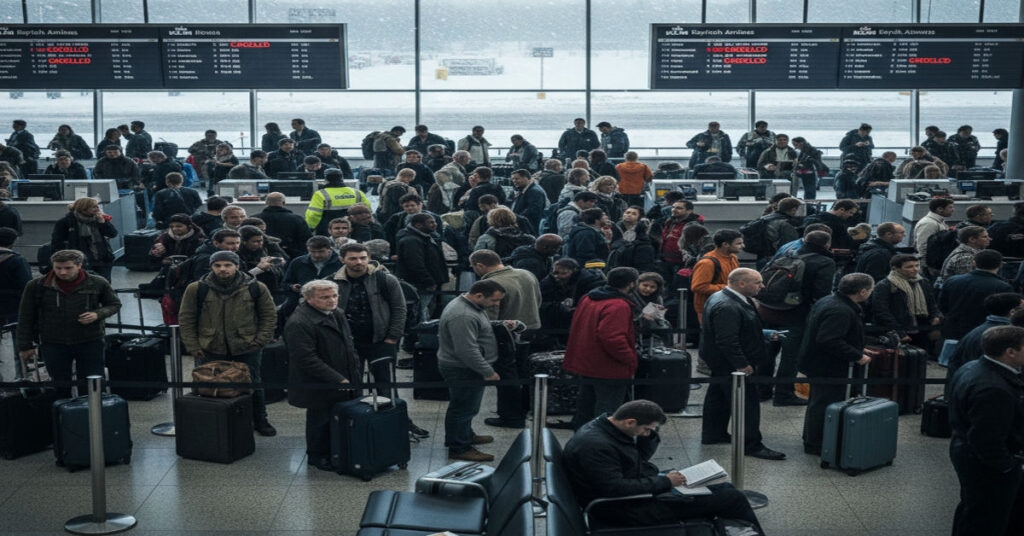

In early 2026, global air travel faced two distinct but equally impactful disruption vectors that hit major European carriers security‑driven cancellations in the Middle East and weather plus operational disruptions across Europe. For travelers booked on KLM or British Airways, the first question is obvious: should you still fly and what rights do you have if your flight is canceled.
Within the past weeks, KLM has adjusted numerous flights to Tel Aviv and Dubai owing to ongoing security concerns in the Middle East. According to the airline’s official travel alerts page, multiple departures to these destinations were canceled or rescheduled through mid‑February 2026 as a precautionary response to escalated geopolitical risk. Meanwhile, British Airways saw significant cancellations and delays in January tied to severe winter storms and staffing pressure across hubs like London and Amsterdam before operations largely stabilized heading into February.
Understanding what happened and what it means for passengers requires looking beyond the headlines to the incentives driving airline decisions and the regulatory frameworks that protect travelers. Long‑term planning, transparent customer service mechanisms, and real‑time tools are now baseline expectations for major carriers contending with risk.
This article dissects the timeline of disruptions, compares how these airlines handled cancellations, clarifies what compensation and rebooking options exist, and evaluates how systemic pressures are reshaping network economics in 2026.
KLM’s Middle East Adjustments and Ongoing Status
In late January and early February 2026, KLM Royal Dutch Airlines reported multiple cancellations and schedule adjustments for flights heading to the Middle East. These were not driven by routine operational challenges but by evolving security concerns linked to regional tensions and expected airspace restrictions.
From February 2 to February 15, the airline flagged temporary alterations to flights to Tel Aviv and Dubai, including direct services bypassing some traditional stopovers. KLM’s published travel alerts emphasize that the situation is fluid and subject to change daily as authorities update airspace advisories.
The economic logic for such adjustments is unambiguous: safety risk translates into unpredictable costs, including rerouting fees, fuel surcharges, and the risk of expensive diversions. At the same time, airlines prioritize crew availability and regulatory compliance over continuity of service when uncertainty spikes.
KLM Middle East Flight Status (Partial Snapshot)
| Destination | Affected Dates | Adjustment Type |
| Tel Aviv | 2–3 Feb, direct routes to 15 Feb | Cancellations with adjusted routing |
| Dubai | 4–15 Feb | Partial cancellations or schedule changes |
| Riyadh | Resumed from 27 Jan | Normalized service |
| Dammam | Resumed from 27 Jan | Normalized service |
(Data based on KLM travel alerts, updated 6 Feb 2026)
These adjustments demonstrate that airlines increasingly treat geopolitical risk as a cost variable in network planning. Avoiding certain airspace or hubs can improve crew predictability, reduce insurance premium spikes, and allow more efficient asset allocation, even if some routes are temporarily hobbled.
British Airways and January Weather Disruptions
While KLM’s recent disruptions centered on security, British Airways experienced its most significant cancellations earlier in January 2026 due to severe winter weather and operational strain at European airports. Heavy snowfall across hubs like Amsterdam and London triggered hundreds of delays and cancellations as ground operations grappled with de‑icing bottlenecks and runway constraints.
British Airways did not issue broad new cancellations in early February but continued to see aftershocks from earlier weather disruptions, with some flights rescheduled or delayed. The airline’s technical operations had to balance safety with cadence, as rapid ground turns in snowy conditions amplify costs and risk.
Select European Weather Disruption Impacts (January 2026)
| Location | Effect | Nature |
| Amsterdam Schiphol (AMS) | 600+ cancellations in short window | Winter weather demands de‑icing volume and runway closures |
| London Heathrow (LHR) | Delays and multiple cancelations | Cascading network backlog |
| Other EU airports | Mixed cancellations and delays | Weather ripple effects in network |
(Compiled from aviation weather disruption reports)
From a business perspective, these cancellations underscore how fragile network schedules become under simultaneous stress. Each disruption at a hub can propagate through an airline’s entire timetable, multiplying delay costs and complicating crew rotations.
Passenger Tools for Checking Flight Status
For real‑time updates on specific flights, both airlines provide tools that allow passengers to monitor changes, often with self‑service options for rebooking or refunds:
- KLM Travel Alerts and Flight Status Tool: Shows current cancellations, offers My Trip rebooking, and options for refunds or travel vouchers.
- British Airways Flight Status Checker: Live status for individual flights, including delay predictions and gate changes.
In both cases, these digital tools reflect the shift toward customer self‑management, reducing call center dependence and speeding response times during peak disruption windows.
Expert Insight on Airline Response
Airline Industry Analyst, Dana Hollister:
“Airlines are balancing operational continuity with risk mitigation. Canceling a flight can be cheaper than flying and diverting midway, so carriers will err on the side of caution when geopolitical alerts spike.”
Former Airline Operations Manager, Luis Delgado:
“The real cost of cancellations isn’t just the refund. It’s crew repositioning, hotel nights, and regulatory compliance, all of which can erode thin profit margins on international routes.”
Aviation Economist, Sara Nguyen:
“European carriers have learned that weather and security risk are now baked into network economics. Flexibility and high‑frequency adjustments have become standard tactical tools rather than exceptions.”
These perspectives highlight that cancellations are system responses rooted in rational cost trade‑offs, not merely customer inconvenience.
Compensation and Passenger Rights
Under European Union regulation EC 261/2004, passengers on flights departing from EU airports (like KLM or British Airways flights from Amsterdam or London) are eligible for compensation if cancellations occur without timely notification or under specific operational conditions. Rights can include:
- Refund or Alternative Rebooking
- Monetary Compensation (subject to distance and lead time)
- Meals, accommodation, and care for extended delays
Compensation varies by route and timeline. Passengers should reference EU 261 details and contact carrier customer service for tailored claims.
Rebooking Strategies and Refund Processes
When flights are canceled:
- Use the airline’s app or website to rebook directly. KLM auto‑rebooks in many cases, but passengers can modify or request refunds.
- Request a travel voucher valid across partner airlines if cash refunds are slow.
- Document incidental expenses such as meals and hotels, as some carriers may reimburse under hardship policies.
Proactive rebooking harnessing digital tools typically leads to better outcomes than waiting for call center support.
Takeaways
- KLM adjusted and canceled multiple flights to Middle East destinations amid security concerns through mid‑February 2026.
- British Airways faced widespread January 2026 weather disruptions causing significant operational cancellations.
- Passengers should use airline status tools for real‑time updates.
- Compensation under EU regulations may apply depending on notification timing.
- Rebooking via airline apps is often fastest and most flexible.
- Incidental expense reimbursement can be claimed with documentation.
- Network economics now routinely factor geopolitical and weather risk into scheduling.
Conclusion
The recent wave of KLM British Airways Flight Cancellations illustrates how external disruptions shape airline economics and passenger experience. Security concerns in the Middle East forced strategic rerouting and cancellations that prioritize safety and operational certainty. Meanwhile, European winter weather exposed vulnerabilities in hub operations that ripple across international networks.
For travelers, these events reinforce the importance of sophisticated self‑service tools, understanding passenger rights, and anticipating change as intrinsic to modern air travel. Carriers are evolving their response frameworks to balance regulatory compliance with the cost pressures of maintaining resilient global networks.
Navigating KLM British Airways Flight Cancellations is less about avoiding them entirely and more about using real‑time data, structured rebooking options, and regulatory protections to mitigate impact when they occur.
FAQs
What compensation am I entitled to for a KLM British Airways Flight Cancellations?
If departing from the EU, you may qualify for compensation under EU 261, including refunds or rebooked flights, plus meals and lodging for long waits.
How do I rebook KLM British Airways Flight Cancellations by security?
Use KLM’s My Trip tool, the app, or contact customer service to change dates or routes. Automatic rebooking is common.
What is the current British Airways flight status today?
Check British Airways’ official flight status page for live updates on delays and departures.
How does the KLM refund process work for canceled Dubai flights?
Passengers can request full ticket refunds or travel vouchers via the KLM website or app if cancellations occur.
Why were European airline flights disrupted in January 2026?
Severe winter weather, including snow and ice, overloaded ground operations and led to widespread cancellations and delays.
References
- Reuters. (2026, January 24). Airlines reroute, cancel flights as tensions ramp up over Iran. Reuters. Retrieved from https://www.reuters.com/business/aerospace-defense/airlines-reroute-cancel-flights-tensions-ramp-up-over-iran-2026-01-24/
- Reuters. (2026, February 2). Shortages of new aircraft, fuel put emissions goal at risk, IATA’s Walsh says. Reuters. Retrieved from https://www.reuters.com/sustainability/shortages-new-aircraft-fuel-put-emissions-goal-risk-iatas-walsh-says-2026-02-02/
- Aviation24.be. (2025, October 18). Airline industry warns EU261 reform could double costs and threaten airfare affordability. Retrieved from https://www.aviation24.be/airlines/airline-industry-warns-eu261-reform-could-double-costs-and-threaten-airfare-affordability/
- Council of the European Union. (2025, June 5). Council sets position on clearer and improved rules for air passengers (Press Release No. 448/25). Retrieved from https://www.consilium.europa.eu/en/press/press-releases/2025/06/05/council-sets-position-on-clearer-and-improved-rules-for-air-passengers/pdf/
- AirHelp. (2026, January 15). Europe: 2,136 flights delayed & 120 cancelled in 14 countries. Retrieved from https://www.airhelp.co.uk/flight-disruptions/europe-mass-flight-delays-cancellations-january-2026-14012026/
- KLM. (2026, February 6). Travel alerts and disruptions. Retrieved from https://www.klm.com/information/travel-alerts Top of Form